
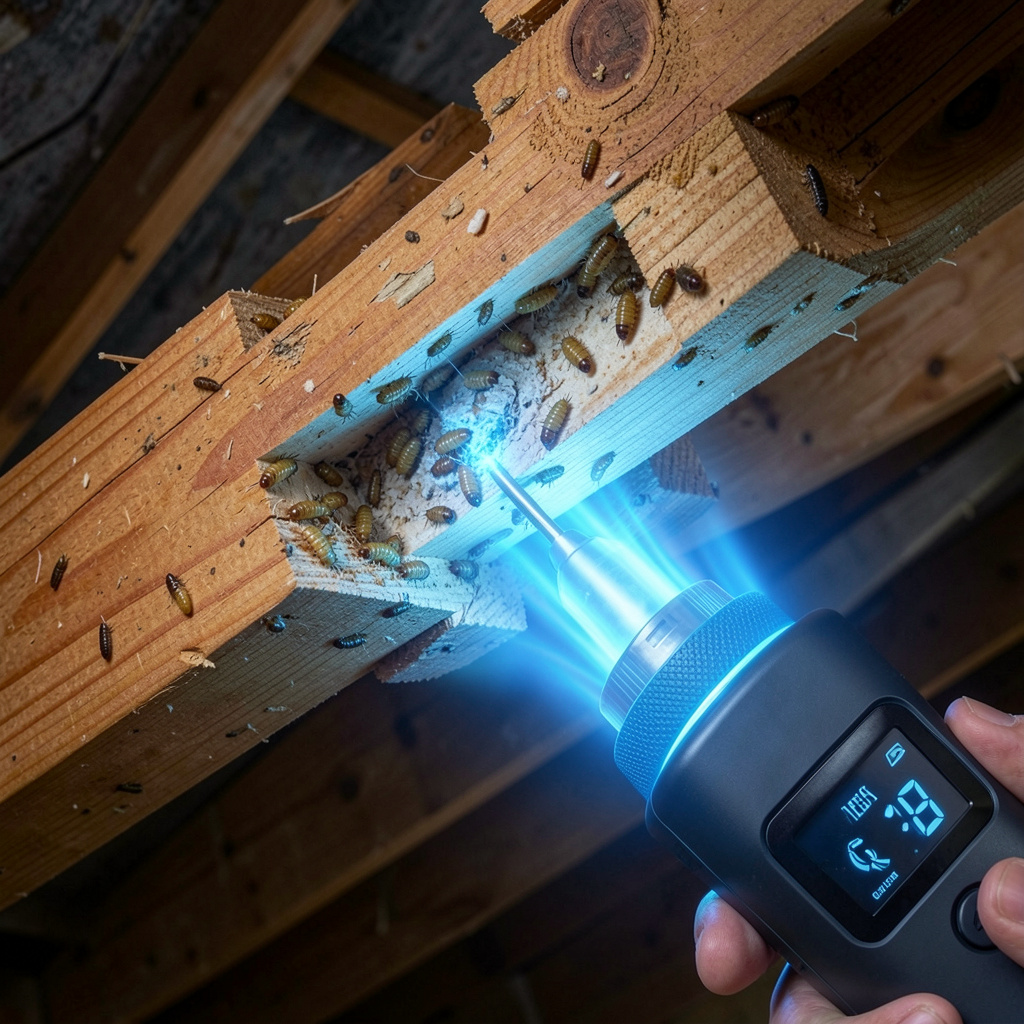
The pest control industry has evolved significantly over the past few decades. While traditional treatments often rely on chemical insecticides, modern technology has introduced innovative alternatives that are safer, more targeted, and environmentally responsible. One of the most promising developments is the use of portable microwave devices for controlling wood-boring insects such as woodworm.
Unlike conventional chemical treatments, portable microwave technology uses controlled electromagnetic energy to generate heat inside infested timber. This process eliminates woodworm larvae, eggs, pupae, and adult beetles without leaving chemical residues behind. Because these systems are portable, professionals can carry them directly to the affected area, making treatment more precise and less disruptive than many traditional methods.
In this guide, we’ll explore how portable microwave devices work, their advantages, limitations, common applications, and why they represent a new era in modern pest control.
What Are Portable Microwave Pest Control Devices?
Portable microwave pest control devices are specialized professional tools designed to eliminate wood-boring insects using controlled microwave energy.
Unlike household microwave ovens, these systems are engineered specifically for timber preservation. They generate carefully controlled heat within the wood through a process known as dielectric heating, targeting pests hidden beneath the surface.
Professional operators can transport these devices directly to the treatment location, allowing localized treatment without dismantling large sections of a building.
How Do Portable Microwave Devices Work?
Microwave energy is directed into the affected timber using a specially designed applicator.
The energy interacts with naturally occurring water molecules inside the wood, causing them to vibrate rapidly.
This molecular movement generates heat throughout the treated section of timber.
When the timber reaches approximately 55–60°C (131–140°F) for an appropriate period, the heat is intended to eliminate:
- Woodworm larvae
- Beetle eggs
- Pupae
- Adult wood-boring beetles
Because the heat develops inside the timber, insects hidden within internal tunnels can be targeted effectively.
Why Portability Matters
One of the greatest advantages of portable microwave systems is their flexibility.
Instead of transporting furniture or removing structural timber, technicians can bring the equipment directly to the infestation.
This provides several practical benefits.
Localized Treatment
Only affected areas need to be treated, reducing unnecessary intervention.
Reduced Disruption
Homeowners often experience less disruption compared with extensive building work or large-scale treatment methods.
Access to Difficult Locations
Portable equipment can often be used in:
- Roof spaces
- Lofts
- Basements
- Crawl spaces
- Stairwells
- Historic buildings
where larger equipment may be difficult to position.
Advantages of Portable Microwave Technology
Chemical-Free Pest Control
Portable microwave treatment uses no insecticides or pesticides.
This makes it attractive for:
- Family homes
- Schools
- Museums
- Heritage buildings
- Pet owners
- Environmentally conscious homeowners
No Chemical Residues
Once treatment is complete, no pesticide residue remains on the timber.
Targeted Heating
Technicians can focus microwave energy precisely where the infestation is located.
This helps avoid unnecessary treatment of unaffected timber.
Environmentally Friendly
By eliminating the need for chemical insecticides, portable microwave devices reduce environmental impact while providing effective pest control.
Suitable for Valuable Timber
Portable microwave treatment is often considered for:
- Antique furniture
- Historic roof beams
- Timber framing
- Listed buildings
- Museum collections
where preserving original materials is important.
Common Applications
Portable microwave devices are used in many different environments.
Residential Properties
Treating:
- Roof timbers
- Floor joists
- Ceiling beams
- Wooden staircases
- Doors
- Window frames
Heritage Buildings
Historic properties often contain valuable original timber that owners wish to preserve.
Museums
Conservators may use microwave treatment for valuable wooden artifacts and collections.
Antique Furniture
Portable systems allow treatment without transporting delicate furniture away from the property.
Commercial Buildings
Localized infestations can often be addressed without major disruption to business operations.
How Portable Devices Compare with Traditional Chemical Treatments
| Feature | Portable Microwave Devices | Chemical Treatments |
|---|---|---|
| Uses Chemicals | No | Yes |
| Leaves Residue | No | Yes |
| Uses Heat | Yes | No |
| Localized Treatment | Excellent | Good |
| Environmentally Friendly | High | Moderate |
| Suitable for Heritage Timber | Often | Depends on the treatment |
Both methods remain effective options, but microwave treatment offers a valuable alternative for situations where minimizing chemical use is important.
Limitations of Portable Microwave Devices
Although highly effective, portable microwave technology has practical limitations.
Access Is Required
Technicians generally need access to the affected timber.
Completely enclosed structural members may require additional investigation.
Existing Damage Remains
Microwave treatment eliminates insects but cannot repair timber already weakened by years of infestation.
Damaged structural elements may still require repair or replacement.
Professional Operation Is Essential
Portable microwave systems should only be operated by trained professionals using specialist equipment.
They are not suitable for DIY treatment.
Are Portable Devices Safe?
When operated by qualified technicians following manufacturer guidelines, portable microwave devices are generally considered safe.
Professional systems include safety features such as:
- Controlled energy output
- Temperature monitoring
- Timed treatment cycles
- Safety procedures for surrounding areas
Unlike household microwave ovens, these devices are engineered specifically for timber treatment.
Preventing Future Woodworm Infestations
Successful treatment should always be followed by preventive maintenance.
Recommended measures include:
- Repair roof leaks promptly.
- Improve ventilation.
- Reduce indoor humidity.
- Keep timber dry.
- Inspect roof spaces annually.
- Monitor furniture for fresh frass and exit holes.
- Address damp problems early.
Healthy timber is far less attractive to wood-boring beetles.
Future Developments in Microwave Pest Control
As technology advances, portable microwave systems are expected to become even more precise and efficient.
Potential developments may include:
- Improved temperature monitoring
- More compact equipment
- Enhanced treatment accuracy
- Greater energy efficiency
- Better integration with digital inspection tools
These innovations could further improve the effectiveness of chemical-free woodworm control.
Common Myths About Portable Microwave Devices
Myth 1: Portable Devices Work Like Kitchen Microwaves
Fact: Professional microwave treatment systems are purpose-built for pest control and differ completely from domestic microwave ovens.
Myth 2: Portable Means Less Effective
Fact: Portability refers to the equipment’s mobility, not its performance. Properly operated professional systems are designed to deliver controlled treatment directly to the affected timber.
Myth 3: Anyone Can Use Portable Microwave Equipment
Fact: Microwave woodworm treatment should only be carried out by trained professionals using specialist equipment and appropriate safety procedures.
When Should You Contact a Professional?
Professional advice is recommended if:
- Fresh frass continues appearing.
- New exit holes develop.
- Structural timber is affected.
- Valuable antiques require treatment.
- You prefer a chemical-free solution.
- You’re considering microwave technology for woodworm control.
A timber preservation specialist can assess the infestation and determine whether portable microwave treatment is the most suitable option for your property.
Conclusion
Portable microwave devices represent an exciting advancement in modern pest control by providing a targeted, chemical-free method for eliminating woodworm and other wood-boring insects. Their ability to generate controlled heat inside timber, combined with their portability and precision, makes them particularly valuable for treating localized infestations in homes, heritage buildings, museums, and antique furniture.
While portable microwave technology is not suitable for every situation, it offers an environmentally friendly alternative to traditional chemical treatments and helps preserve valuable timber without leaving pesticide residues. As the technology continues to evolve, portable microwave devices are likely to play an increasingly important role in sustainable pest management and timber preservation.Visit online https://www.shashel.eu for more details .